How CARL's Hub Renderer Works
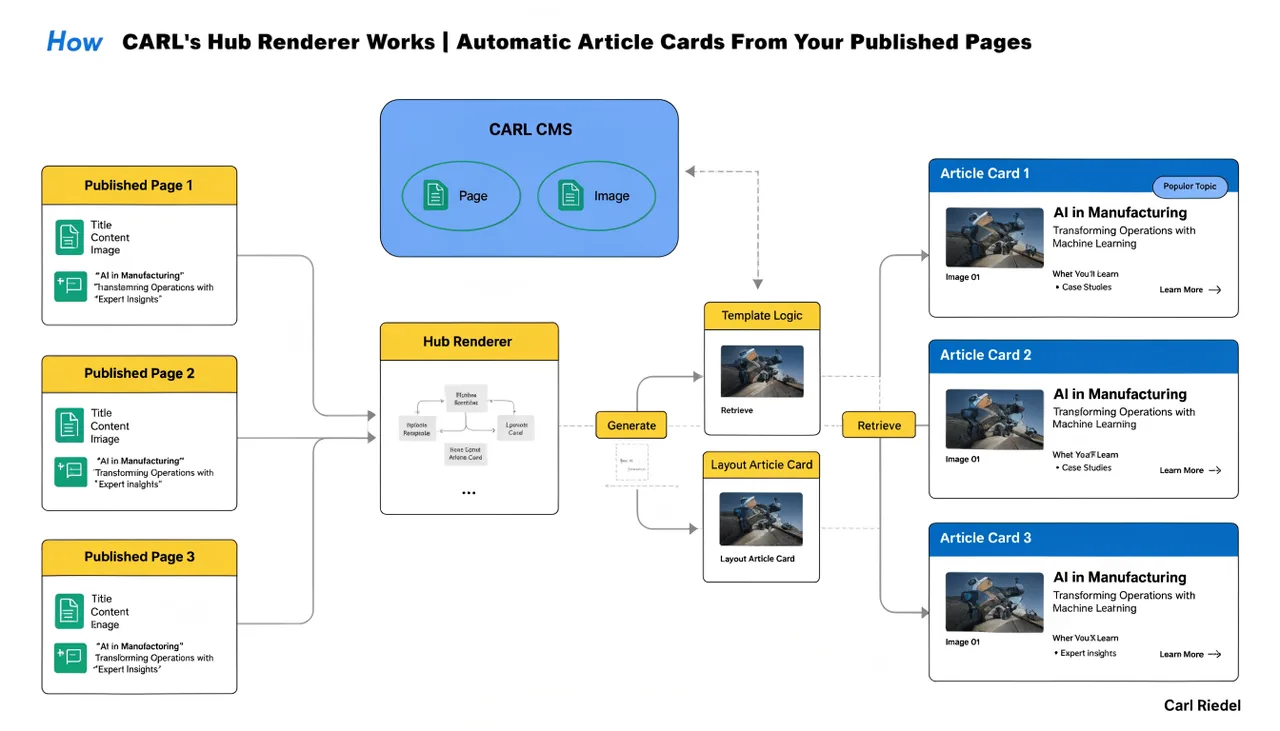
CARL's hub renderer automatically generates a grid of article cards for any directory on your site. Point it at a directory, and it queries the database for all published pages in that directory and renders them as a Bootstrap card grid, complete with title, meta description, and a read more link. No manual list maintenance, no editing the hub page every time you publish a new article.
How It Works
The hub renderer is a PHP include that accepts a directory path as its input. When the hub page loads, the renderer queries the database for all published pages whose directory matches the one you specified, orders them by publish date, and renders a card for each. Add a new article to the directory, publish it, and it appears on the hub page automatically on the next load. Nothing else required.
What Each Card Contains
Each card displays the page title, the meta description, and a link to the full article. This is why well-written meta descriptions matter on every page: the meta description is what visitors read on the hub page when deciding which article to click. A blank or weak meta description produces a weak card. The Site Health checker flags pages with missing meta descriptions for exactly this reason.
Hub Pages in CARL
A hub page in CARL is just a regular page with the hub renderer included in its PHP Snippet field and a short introductory paragraph in the body. The renderer handles everything else. This is why hub pages should never contain manual lists of article links: the renderer already outputs those cards dynamically, and manual links would duplicate them and fall out of sync every time you add or remove an article.
Using the Hub Renderer for Any Directory
The hub renderer isn't limited to wiki clusters. You can use it on any page where you want an auto-generated index of content from a specific directory: a blog index, a use case listing, a product documentation section. Any directory with published pages in it can have a hub page built this way. The renderer reads from the database, so the output is always up to date without any manual maintenance.